1001Güzel Söz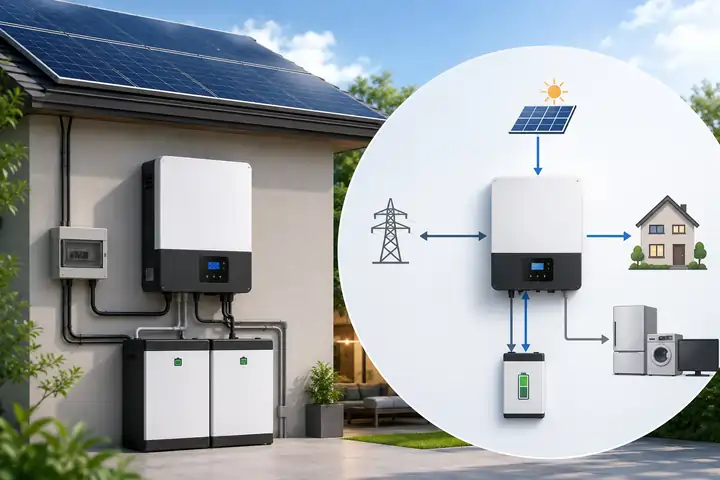
A solar system can work perfectly on a sunny afternoon and still go quiet during a grid outage. That surprises a lot of homeowners. The missing piece is not always more panels. Sometimes it is the inverter, because that box decides how solar power moves between the roof, the home, the grid, and a battery.
A solar hybrid inverter is an inverter that can handle both solar production and battery storage. In plain terms, it converts the direct current from solar panels into usable household power and can also charge or discharge a battery when the system design allows it.
What the inverter actually does
In a basic grid-tied solar system, the inverter sends solar energy into the home first and exports extra power to the utility grid. That setup can lower bills, but it does not automatically provide backup power. During an outage, many grid-tied systems shut down for safety unless they are paired with storage and proper backup equipment.
A hybrid inverter changes the design conversation. A product such as the Sigen Hybrid Inverter is built for solar now and battery storage later, so the homeowner is not locked into a solar-only setup forever.
According to the U.S. Department of Energy, solar-plus-storage systems can use batteries to store extra solar electricity for later use. That matters at night, during peak utility rates, and during outages if the system includes backup switching.
When a hybrid design makes sense
A hybrid inverter is usually worth a closer look when a home has one of three needs: battery backup, time-of-use savings, or future electrification. Time-of-use rates charge more during certain hours, often in the evening, when solar panels are producing less. A battery can shift stored solar into those expensive hours.
It can also help a home prepare for new loads. An EV charger, induction range, electric water heater, or heat pump can change a home’s electricity pattern quickly. A solar-only inverter may still be fine, but a battery-ready inverter leaves more room to adapt.
The product specs matter. Sigenergy lists its Sigen Energy Controller at 3.8 to 11.5 kW, with four MPPT inputs and efficiency up to 97.8%. MPPT, short for maximum power point tracking, helps the inverter harvest power from different solar strings when conditions are not identical across the roof.
There is also a serviceability angle. A homeowner who installs solar today and adds storage later may avoid replacing more equipment if the original inverter was selected with that path in mind. That does not make future upgrades free, but it can keep the second project from feeling like a full redo.
When you may not need one
A hybrid inverter is not automatically the best fit. If a home has strong net metering, rare outages, no interest in batteries, and a tight budget, a standard grid-tied inverter can still do the job. The better question is whether storage might become useful within the life of the system.
For homes that may add storage later, a hybrid inverter with battery-ready storage is worth comparing early, before the panel layout and electrical plan are already locked.